
Road lights, or street lamps as they are often called, serve a crucial role in our daily lives. They illuminate the pathways we traverse each night, ensuring that both vehicles and pedestrians can navigate safely through darkness. Imagine driving down a quiet road under the soft glow of streetlights; it’s not just about visibility but also about creating an atmosphere of safety and comfort.
Historically, street lighting has evolved significantly from gas lamps to modern LED technology. Today’s road lights are designed with efficiency in mind—using light-emitting diodes (LEDs) that offer high luminosity while consuming less energy than traditional bulbs. These advancements mean that cities can save on electricity costs while reducing their carbon footprint.
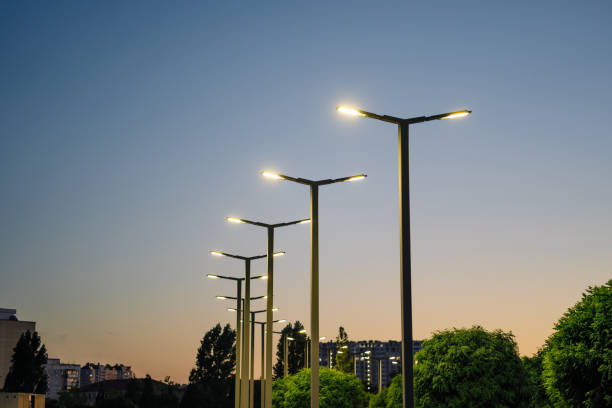
One might wonder how these seemingly simple devices impact urban life beyond mere illumination. Well-placed street lighting enhances traffic flow by improving visibility at intersections and along curves where accidents could easily occur due to poor sightlines. Furthermore, studies have shown that well-lit streets deter crime—a bright environment fosters a sense of security for residents walking home after dark.
Modern designs incorporate smart technologies allowing for dimming during late-night hours when fewer people are out, thus conserving energy without compromising safety. Some systems even adjust brightness based on real-time data regarding pedestrian movement or vehicular traffic.
In addition to functionality, aesthetics play a vital role in contemporary urban planning. Cities increasingly recognize the importance of integrating attractive lighting fixtures into public spaces—not only do they enhance visual appeal but they also contribute to community identity and pride.
Interestingly enough, some municipalities have begun experimenting with solar-powered options for outdoor lighting solutions—these systems harness sunlight during the day to power themselves at night! This innovation not only reduces reliance on grid electricity but also promotes sustainability within communities striving towards greener practices.
As we look ahead toward future developments in road lighting technology—from adaptive systems responding dynamically to environmental conditions—to more environmentally friendly materials used in lamp construction—the journey continues toward making our roads safer and more inviting places for everyone.